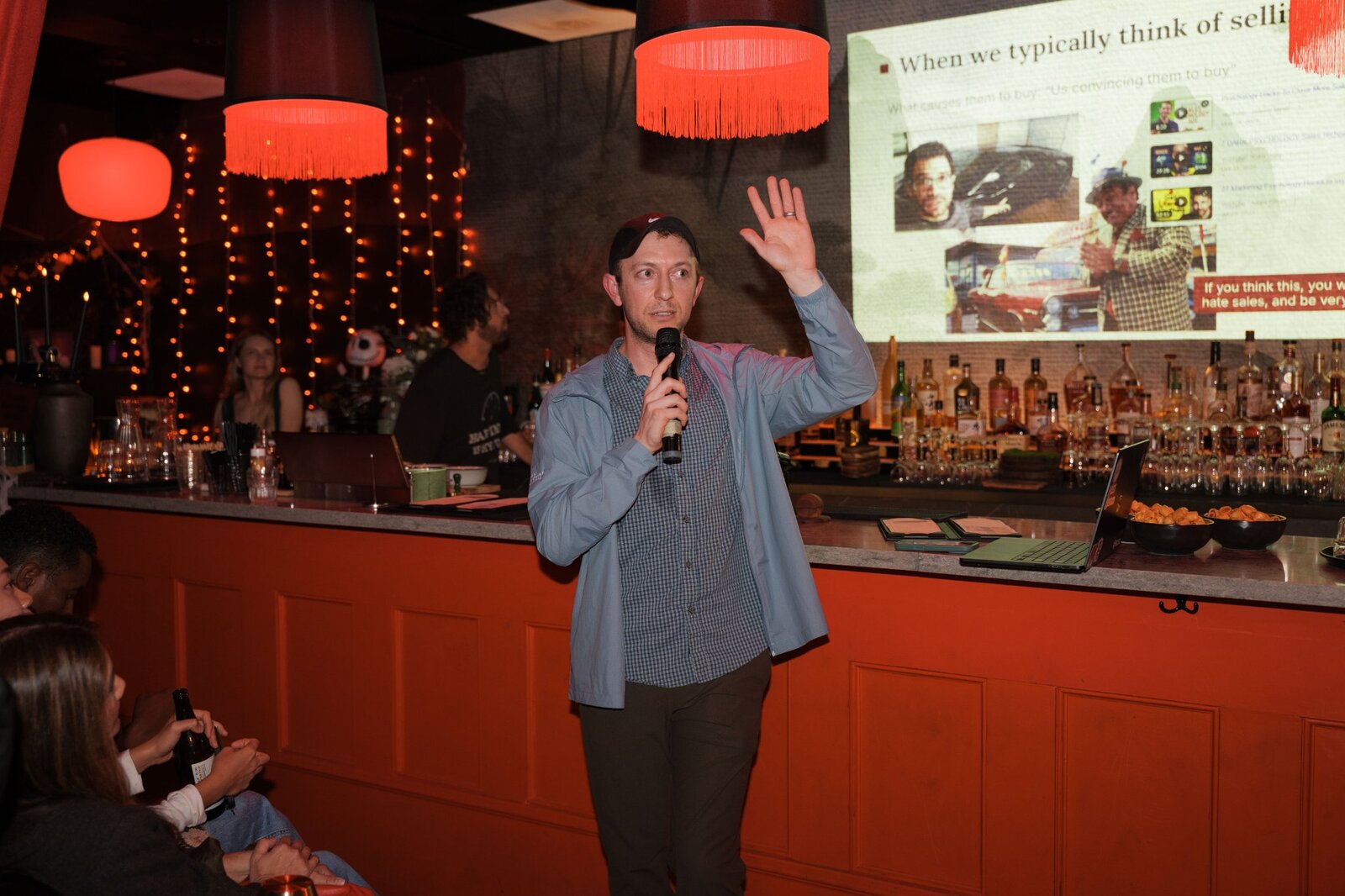
Inside the room
Find customer pull before you build
$0 → $4M
ARR in two years after Rob’s pivot
81
founders in the room
Pull is an urgent priority, not just pain
Rob defines pull as a customer reaching for your product or idea. It exists when they need to get something done now and their current options do not work. He summarizes the discovery in four prompts: what project are they doing, why now, what options do they have, and what is limiting those options?
His example was AI notetaking for financial advisors. They needed notes in their CRM and skipping them could create compliance risk, so they adopted the tool. Insurance agents had similar workflows but less urgency, and did not buy. Same product, different priority.
Pain and ROI do not make a purchase inevitable

Rob shared examples of prospects who described a problem as painful or acknowledged large potential savings, yet still did not buy. The issue was that other priorities came first. “Bitchin’ ain’t switchin’,” as Bob Moesta puts it.
Look for the buyer who needs to act now, not only someone who agrees the problem is real. When some customers move quickly and others stall, find out what makes the first group different.
Test pull before you build
Get close to the work through shadowing, consulting, or doing the job alongside potential customers. Ask what they would pay someone to solve right now. Enthusiasm is not proof of demand; a real signal is someone asking how to start, even before the product exists.
Rob recommends finding three to five people with the same need and having several conversations within a few days. If nobody tries to buy, revisit the customer or the problem before building further.
Sell by understanding where they are stuck

Rather than overwhelm a buyer with a pitch, ask why they took the call and fill in the priority framework together. Then explain the solution briefly and show what their work looks like when the blockage is gone. Keep a demo short and focused on that outcome.
For larger deals, find a champion who will help move the purchase through the organization. Once they are committed, agree on the steps and dates needed to reach value.
Make successful customers repeatable
Rob describes a startup as a system that turns customers with urgent needs into successful case studies. Keep the path simple: understand the need, confirm the fit, answer the questions required to buy, plan the work, and get the customer to value. Remove steps that add friction without helping the buyer.
This week, write out one customer’s urgent project, why it matters now, what they have tried, and why those options fail. Test that explanation in five conversations. Your calendar, Rob says, shows what you believe will make the company grow. Make time to find pull.
About the speaker
Rob Snyder is a fellow at Harvard Innovation Labs and author of The Power of Pull. This recap draws on his slides and workshop notes; examples and results are as presented by Rob.