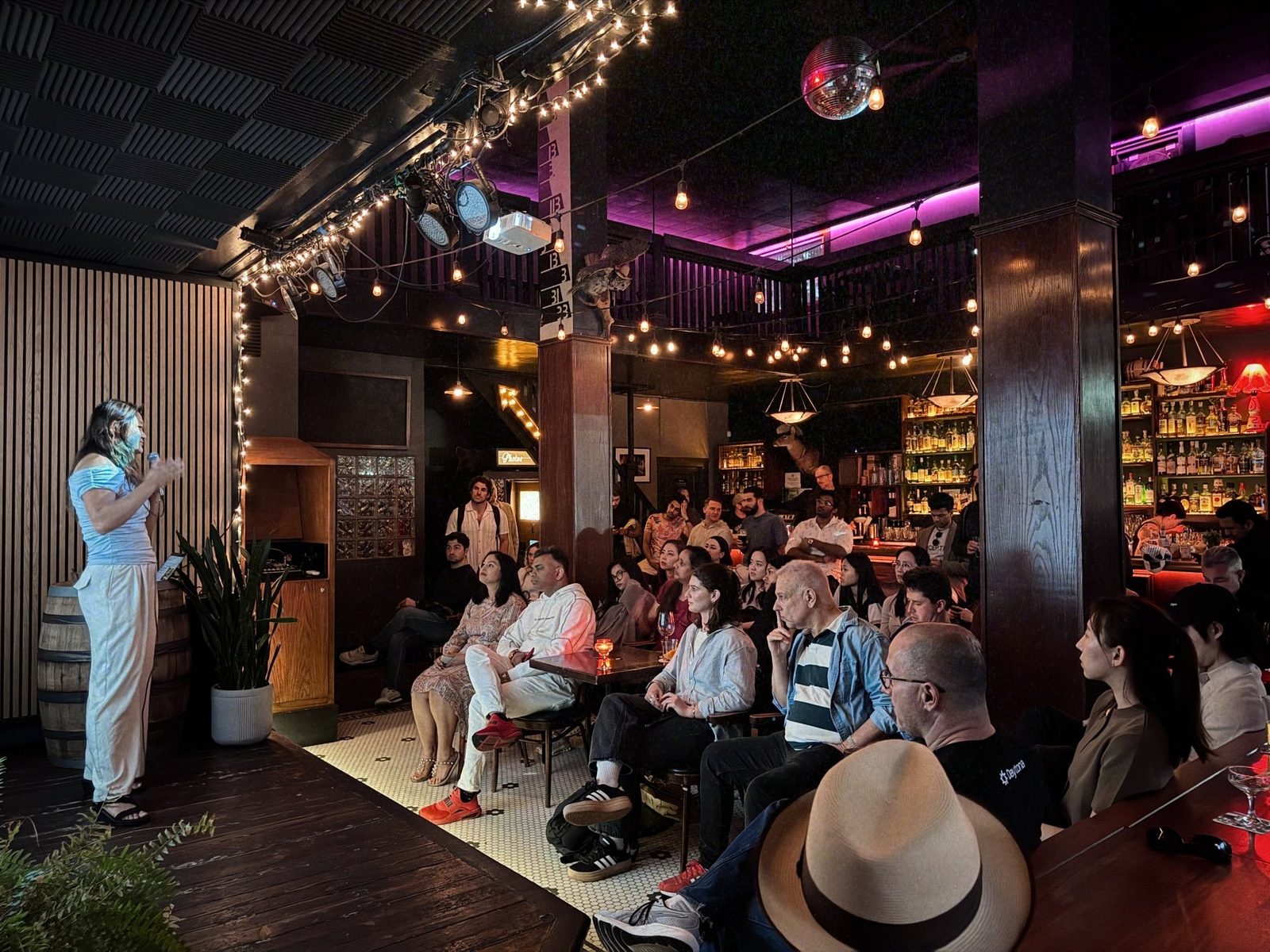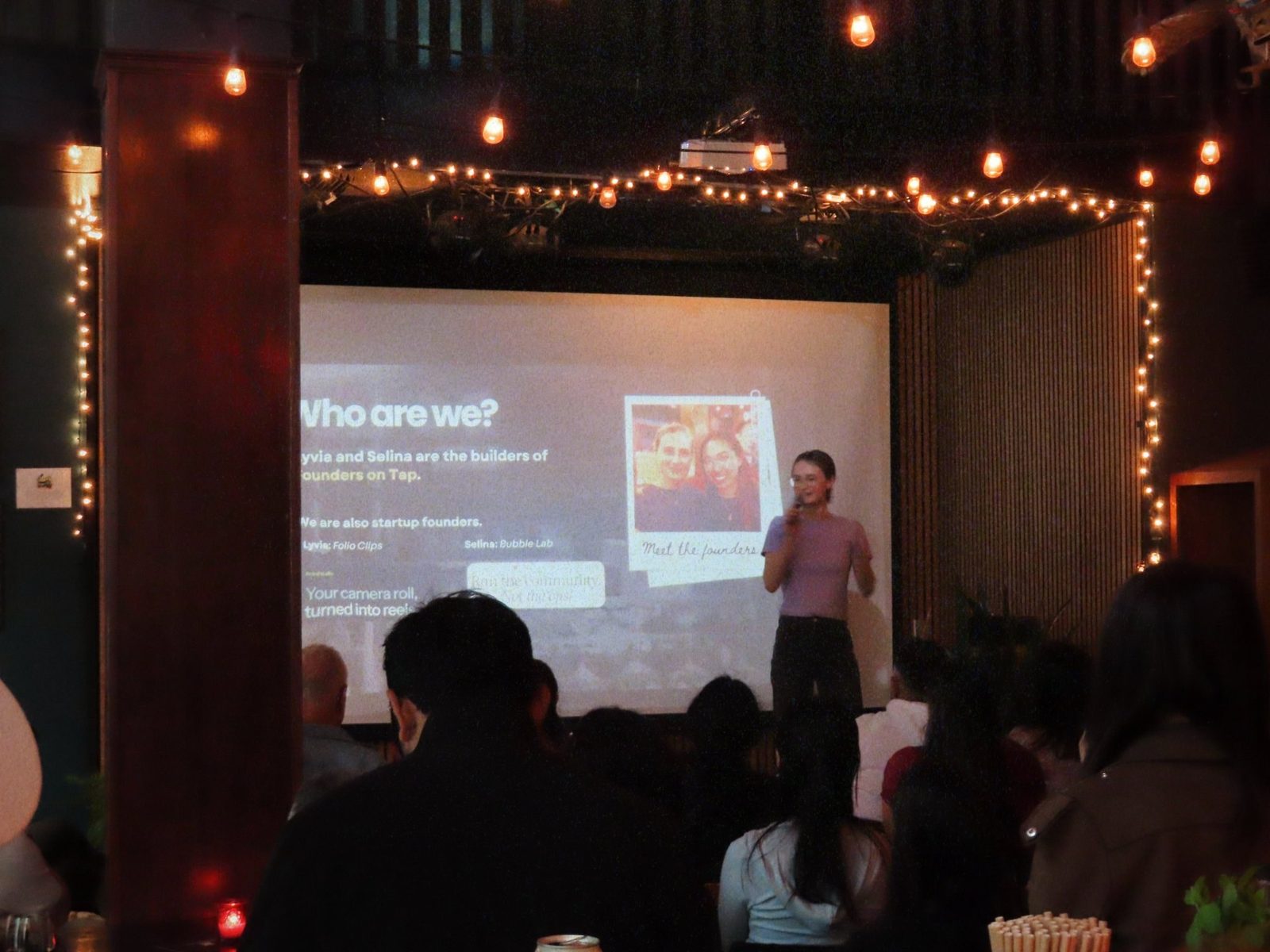
Inside the room
The Founder Content Playbook Nobody Tells You
100K
followers, up from 150 in 13 months
100K
users brought to Fig
5M–140M
monthly video views
15%
of videos drove most of the growth
Most founder-content advice stops at "be authentic" and "post consistently." That sounds nice. It is also nearly useless when you are staring at an empty camera, wondering what to say, how to say it, and whether it will help your startup at all.
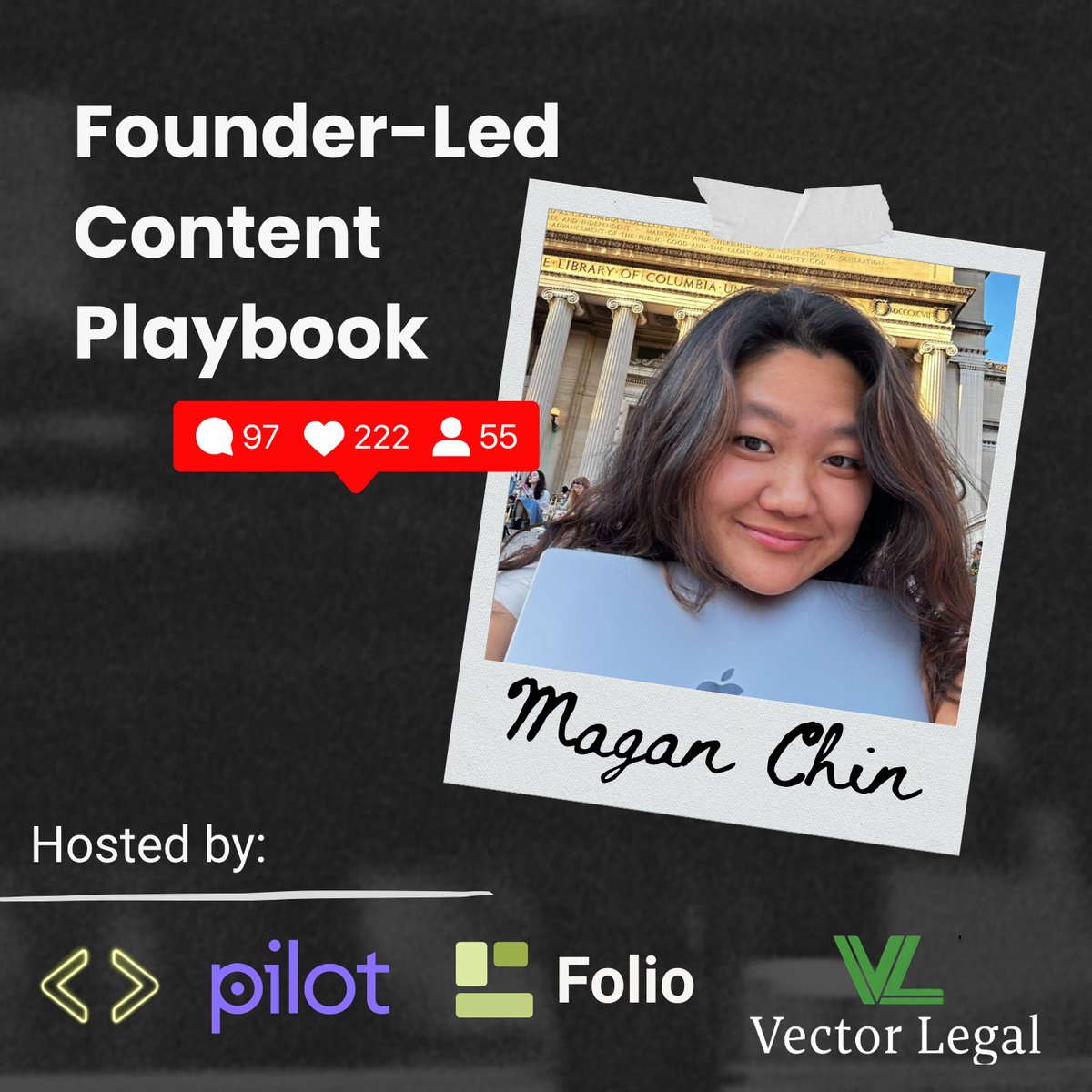
At our latest Founders on Tap workshop, Magan Chin, founder of Enoki and Fig and the creator behind GenZBestie, opened up the actual operating system behind her growth. She started posting in June 2025 with 150 followers. By February 2026, she had 30,000 followers and a 3,000-person waitlist for Fig. By August, she had built a 100,000-person audience and helped Fig reach 100,000 users, with monthly video views ranging from 5 million to 140 million.
The polished growth curve hides the part that matters: the 200-view jail, the formats that failed, the repeated scripts, and the unglamorous daily loop. Here are the insider secrets founders should steal.
Your content has four different jobs
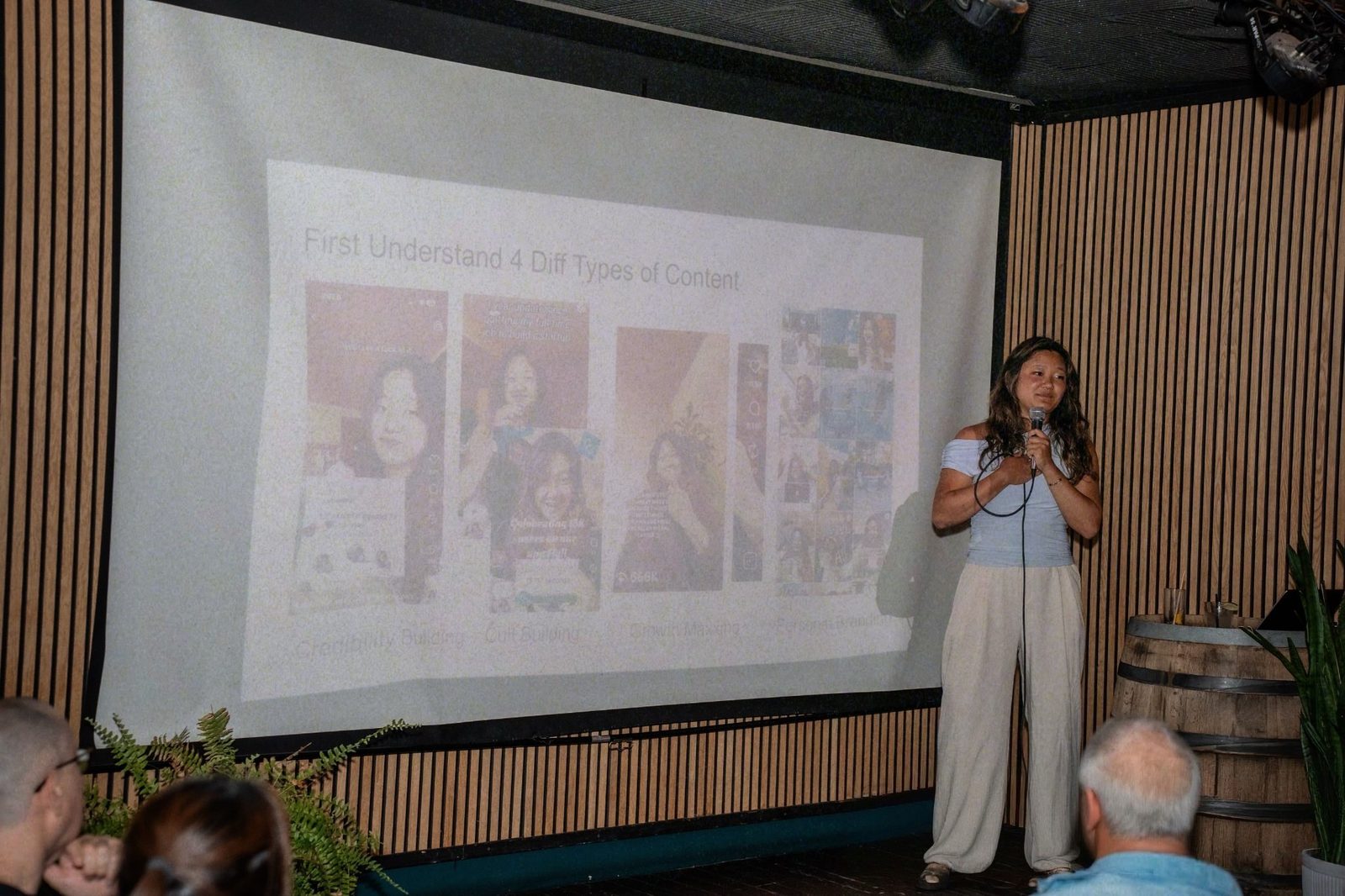
A common founder mistake is treating every post as if it should build credibility, reveal personality, go viral, and convert customers all at once. Magan separates content into four jobs: credibility building, cult building, growth maxxing, and personal branding.
Credibility content proves you understand the space. Cult-building content brings people into the process through progress updates, micro-decisions, behind-the-scenes clips, and recurring ideas they can identify with. Personal-brand content reveals the interests and worldview that attract aligned people. Growth content is built to reach a specific ideal customer and move that person toward a product action.
The individual posts can look different, but together they should tell one coherent story. Your feed is not a pile of disconnected tips. It is the public narrative of what you believe, what you are building, and why someone should keep watching.
Brand content builds trust. Growth content converts demand
Magan draws a hard line between branding content and growth content because they optimize for different outcomes.
Brand content is the long game. It can cover research, developments in your space, your progress, the decisions you are making, or the person behind the company. Its job is to create trust and make people want to stay with you.
Growth content is closer to a product experiment. Its job is to test which message reaches your ideal customer, makes them feel seen, and gets them to act. When a founder judges a trust-building story only by sign-ups, or judges a conversion video only by whether it feels beautifully on-brand, they are grading the content against the wrong goal.
The hook can do 95% of the work
You can have an excellent script and still lose the viewer before the point arrives. Magan's blunt assessment: the hook can do 95% of the work.
Hooks can be visual, auditory, verbal, or written on screen, but the verbal hook is what often carries a viewer beyond the first six seconds. The strongest hooks do not begin with a formal introduction. They collapse a confusing concept into something familiar, challenge an assumption, expose a risk, or name a frustration the viewer already feels.
Instead of asking, "How do I make this sound impressive?" ask, "What is the clearest, most tension-filled version of the truth?" Then test multiple openings for the same core idea. Your first sentence is not decoration. It is distribution.
The viral growth script is a seven-part machine
Magan's most repeatable growth structure is: tension → stakes → story → named problem → cause → solution → CTA.
01
Hook with tension.
Challenge an assumption or reveal a worrying pattern.
02
Raise the stakes.
Show what your audience could lose if nothing changes.
03
Make it concrete.
Use recognizable people, vivid examples, and specific contrasts.
04
Name the problem.
Give the pattern a memorable label or metaphor.
05
Reveal the cause.
Explain why smart people still fall into the trap.
06
Introduce the solution.
Let the product feel like the natural resolution, not an ad break.
07
Close the loop.
Return to the opening idea and end with one clear action.
The key insider detail is placement. The product does not barge into the story. It resolves the tension the story has already made the viewer care about.
Do not invent every format from scratch
Magan's early UGC work taught her something many founders resist: originality is not the same as inventing the entire grammar of a video.
Search your niche on TikTok. Study the videos with unusual engagement. Notice the lighting, camera angle, on-screen text, cadence, sound, hook, and script structure. Adapt the proven format to your own message. Test several formats, repeat the one that works, and only then use the intuition you have built to create new formats.
This is not permission to copy another creator's ideas. It is permission to stop pretending that every successful filmmaker invents a new camera language. Borrow the container. Bring your own insight.
The algorithm is a lab, not a lottery
If a video underperforms, Magan does not reduce the result to "the algorithm hated it." Analytics tell you where the video broke. A weak opening points toward the hook. An early drop after the hook can expose pacing or a mismatch between promise and delivery. Attention without action can reveal a weak CTA or an offer that did not feel like the natural next step.
One platform can also become a testing ground for another. Magan recommends posting variations to TikTok, then pushing the strongest version to Instagram. Trial Reels can serve the same function. Her highest-growth period for Fig came during a month when she posted the same proven video every day through Trial Reels.
Read that again: the breakthrough did not come from producing 30 unrelated masterpieces. It came from repeating a message that had already earned the right to be repeated.
The tiny distribution details are not tiny
Founders love to obsess over the idea and ignore the packaging. Magan's list of variables that quietly change performance includes the type of content, keywords in the header, the bio, account warm-up, Trial Reels, music, lighting, audio, energy, and cadence.
Her practical direction on camera energy is especially useful: go about 20% bigger than feels natural. The lens flattens energy. What feels slightly exaggerated while recording can look engaged and clear on screen.
Also determine the medium that naturally fits you. A charismatic talking head is not the only route. Voiceovers, carousels, and short B-roll clips with text can outperform a format you are forcing yourself to make.
Consistency is a 90-day research project
Magan's recommendation for a founder starting from zero is simple and uncomfortable: post every day for 90 days.
The goal is not to prove your discipline to the internet. It is to collect enough data to learn which topics, formats, hooks, and stories belong to you. After that learning period, double down and repurpose. On busy days, use a six-second clip or B-roll with a text overlay. A sustainable system needs a low-effort version, not just an ideal version.
Her own loop was straightforward: script at night, film in the morning, work on the startup, edit and distribute at night, schedule LinkedIn for the next morning, then prepare the next script. The system removed the daily question of whether content would happen.
UGC farming and creator partnerships solve different problems
For founders ready to expand beyond their own account, Magan separates two models that are often lumped together.
UGC farming means hiring multiple creators to operate new accounts and post about your product daily. Brand deals mean paying a creator with an established audience to publish on their own account. Brand deals are much more expensive, but they bring built-in distribution and can convert strongly. UGC farms give you volume, testing capacity, and more shots at finding a repeatable creative.
Choose based on the bottleneck. If you do not yet know which message works, buy experimentation. If you already know the message and need trusted reach, buy distribution.
The real founder-led growth secret
Content is not a performance layered on top of company-building. Done properly, it is customer research, message testing, product validation, trust-building, and distribution happening in public.
Magan started with an iPhone and a $15 Amazon microphone. The equipment was not the moat. The moat was her willingness to hit post, study what happened, and return with a smarter experiment the next day.
That is also why the low-performing posts are not wasted. They build the intuition behind the 15% that eventually drives most of the audience and users. The goal is not to make every video viral. The goal is to create a system that makes the winning videos discoverable, repeatable, and connected to the startup you are actually trying to grow.
If you are proud of what you are building, give people the chance to believe in it. The first move is still the simplest one: hit post.
About the speaker
Magan Chin is the founder of Enoki and Fig and the creator behind GenZBestie. Her content has built a 100,000-person audience, driven millions of monthly video views, and led to partnerships with companies including OpenAI, Cursor, Vercel, Canva, Adobe, Gamma, Replit, and Bolt.new.
This article is based on Magan's August 2026 Founders on Tap workshop, Grow Your Startup Through Content.